From real tennis to lawn tennis
Indoor court games such as jeu de paume and real tennis used walls and complex scoring. In the 1870s, lawn tennis moved outdoors onto grass with simpler equipment and published rules. Clubs spread the game socially and competitively. Understanding that shift explains why modern tennis looks so different from its indoor ancestors.
1968 and the Open Era
In 1968 major tournaments began allowing amateurs and professionals to compete together. That Open Era change unified the top of the sport, accelerated professional calendars, and altered how champions were compared across decades. Pre-Open results still matter historically, but they sit under different eligibility rules.
Grand Slam traditions
The Australian Open, Roland-Garros, Wimbledon, and the US Open form tennis’s Grand Slam cycle. A calendar-year Grand Slam means winning all four in the same year—first achieved by Don Budge in 1938, and by Rod Laver in 1962 and 1969. Each major’s surface and season still shape how eras are remembered.
Clay court heritage
Clay raises bounce and slows the ball, rewarding patience, sliding footwork, and longer exchanges. Roland-Garros made red clay a central chapter of tournament culture. Clay literacy helps readers interpret European spring tennis and compare it fairly with grass and hard-court eras.
Rivalries in historical context
Rivalries such as Evert–Navratilova, Borg–McEnroe, and Federer–Nadal–Djokovic frame how fans remember decades. Style contrasts and major stages matter as much as raw tallies. Exact head-to-head numbers belong in archives; historical writing focuses on significance and context.
Racket technology over time
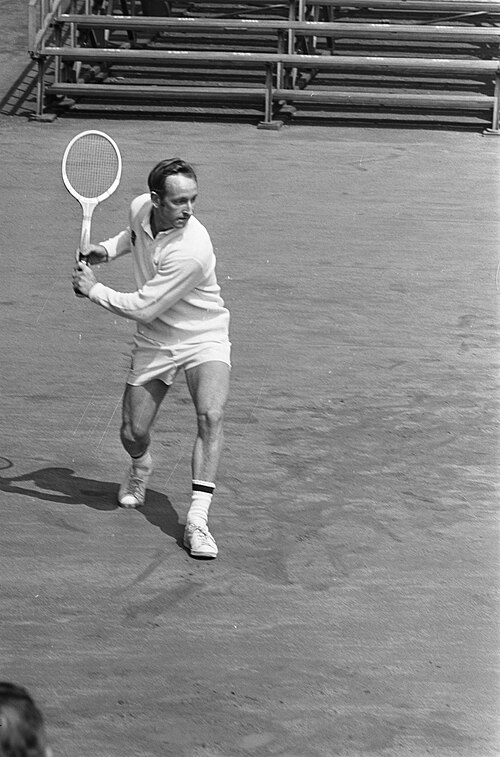
Wooden rackets limited power compared with later metal and graphite frames. Larger heads and modern strings enabled heavier spin and baseline aggression. Equipment change is one reason cross-era player comparisons need careful framing.
Women’s tennis development
From Suzanne Lenglen’s public stardom to Billie Jean King’s advocacy and later modern champions, women’s tennis grew through competition and cultural change. Tour structures and media attention evolved on their own timeline alongside the men’s game.
Team tennis and Davis Cup
The Davis Cup, founded in the early 1900s, put national teams at the center of men’s competition. Women’s team tennis developed separately and is now associated with the Billie Jean King Cup name. Team ties add home crowds and national narrative to a sport often framed as individual.